



What makes on-page SEO so crucial?
Your website must be designed, published, and optimized for Google and other search engines to rank and attract new visitors. Because it informs Google about your website and how you provide value for users and customers, on-page SEO is crucial. It aids in the optimization of your website for both human users and search engine robots. You can see adjustments and modifications you make to optimize your website, unlike off-page and technical SEO aspects. On-page SEO is all up to you. Thus you must execute it properly. Fortunately, an on-page SEO strategy isn’t as difficult as some people claim. The reality is that you should only be concerned with a small number of ranking criteria. Making an outstanding user experience your first goal should come before overly optimizing material. Different search engines scan and rank websites; as time goes on, their algorithms include more and more elements. It is widely accepted that prominent keyword placement and a reasonably high keyword and synonym density are critical. Let’s examine the most crucial on-page SEO elements. The Five Most Important on-page SEO Factors 2022 are as follows:Meta Title and Description
The title tag is above the meta description and under the URL in SERP. So, title tags must be catchy, consistent with your brand, and keyword-optimized. Creating title tags and meta descriptions is more of a subtle art than a precise science in practice. Metadata optimizations are the most fundamental of activities. Despite the complexity of the method, title tag regulations are straightforward. SEO best practices require the exact-match query, but your brand voice requirements can call for you to be lighthearted and informal, which makes it challenging to include those keywords organically. The benefit of creating quality metadata for a client’s title tags is that you’ll gain their trust by demonstrating your familiarity with their target market, offering, and sector.Page Content
The center of on-page SEO is page content. It explains to visitors and search engines what your website and company are all about. The process of producing high-quality content begins with selecting relevant keywords and themes. Conduct keyword research by typing phrases into Google to see what websites and rivals’ web pages come up with. Every excellent piece of content has two characteristics from an SEO standpoint. A page is deserving of a search result rank based on its content. It is crucial to search engines since it is what the user intends to see. As a result, producing quality material is crucial.Keywords
 The simplest way to let them know that the information on your website responds to a user’s query is in your language. In the body, headers, or both, pages with the query’s keywords are more likely to be relevant to the search. Simply put, you must be aware of the audience while creating content. Always do your homework to ensure you don’t miss any possibilities.
Internal Linking
When discussing on-page SEO, internal linking is often overlooked. It is because internal links make it easier for crawlers to find your website, investigate fresh information, and comprehend the context of distinct pages. However, developing an internal connecting system as your website expands is crucial. The user’s ability to access material on your website that benefits them may suffer if there are no internal links on your pages. And if they cannot access it, it immediately lowers your conversion rates.
Internal links may help your on-page SEO by doing the following:
The user’s ability to access material on your website that benefits them may suffer if there are no internal links on your pages. And if they cannot access it, it immediately lowers your conversion rates.
Internal links may help your on-page SEO by doing the following:
- Including links in new postings to relevant, current material
- Including connections to fresh postings from relevant, previously published information
Pagespeed
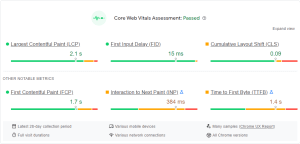 Your site has to be able to load, whether it is being viewed on a desktop or a mobile device. The importance of page speed is paramount when it comes to on-page SEO. Google is primarily concerned about the user experience. Google knows visitors are less likely to remain around if your website loads slowly or erratically. Additionally, site performance might affect ROI and conversions. Use Google’s PageSpeed Insights tool at any moment to check the performance of your website.